Henrik Weber · 27 October 2026
Precision Analytics Applications in Standalone Note-Taking Web Services
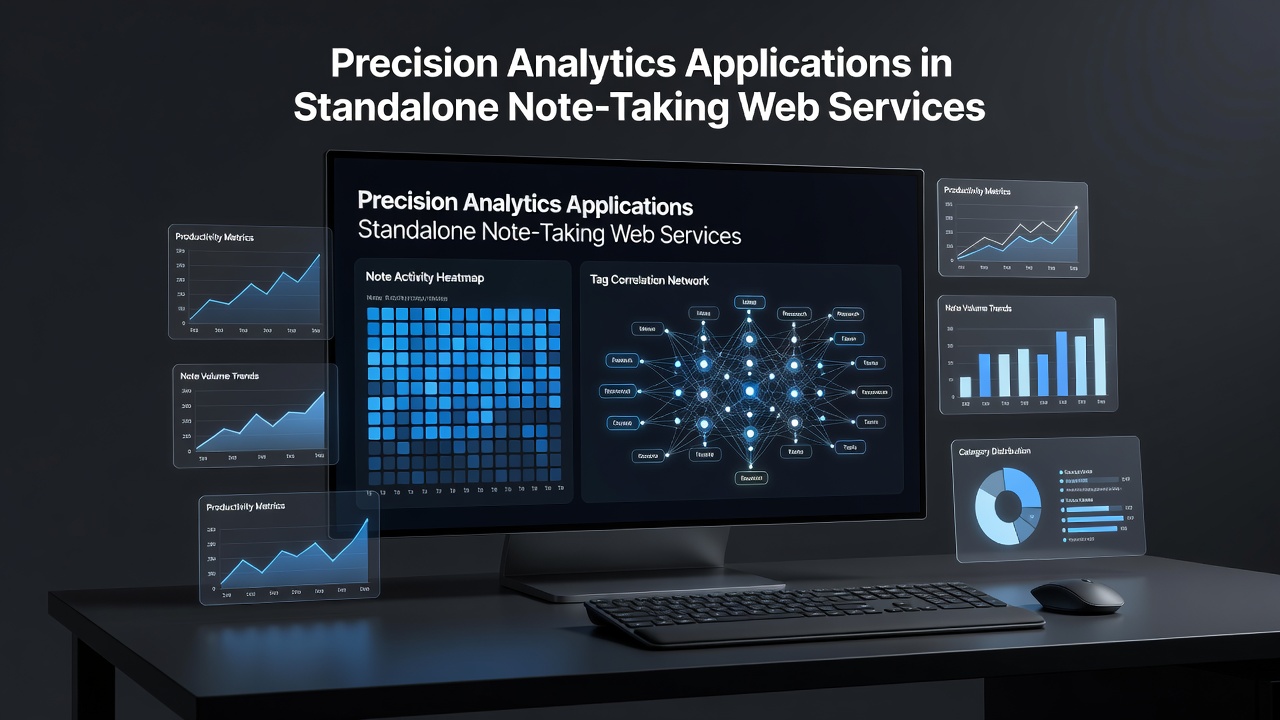
Standalone note-taking web services operate as independent platforms where users create, organize, and retrieve digital notes without reliance on major corporate ecosystems, and precision analytics provide the mechanisms to track granular interactions such as note creation frequency, search patterns, and folder navigation sequences. These services often run on self-hosted or lightweight web frameworks that collect structured data points including timestamps, device types, and content length metrics. Researchers have documented how such data layers enable developers to identify usage bottlenecks while maintaining operational independence from third-party ecosystems. Precision analytics applications begin with event logging systems that capture every user action in sequence, allowing reconstruction of individual workflows across multiple sessions. Data aggregation tools then process these logs into heatmaps and cohort reports that highlight which note categories see the highest revision rates. In practice this means developers receive alerts when users spend extended periods in search functions without locating existing notes, prompting interface adjustments that streamline retrieval paths.Core Components of Precision Analytics in Note-Taking Platforms
Event tracking libraries form the foundation by recording metadata such as cursor movements within text editors and tag application sequences, while session replay capabilities reconstruct user journeys without storing raw note content. Visualization modules convert these streams into interactive charts that display retention curves segmented by note complexity, and machine learning overlays classify patterns such as rapid deletion cycles that may indicate interface friction. Observers note that these components operate in real time, updating dashboards within seconds of new activity logs arriving at the backend.
Integration with privacy-compliant storage solutions ensures that analytics pipelines separate personally identifiable information from behavioral signals, a requirement reinforced by regulatory frameworks across multiple jurisdictions. For instance, guidelines from the National Institute of Standards and Technology outline data minimization practices that many standalone services adopt when configuring their analytics stacks. This separation allows statistical modeling to proceed while reducing exposure of sensitive user material.Applications in Feature Optimization and Retention Analysis
Standalone services apply precision analytics to test incremental changes such as repositioning the save button or altering auto-tagging suggestions, measuring impact through A/B cohort comparisons that track completion rates before and after deployment. Retention analysis further segments users by note volume thresholds, revealing that individuals maintaining over fifty active notes demonstrate higher return frequencies when search latency remains below 300 milliseconds. Reports from the Australian Bureau of Statistics on digital service adoption have shown parallel trends in productivity tool engagement across independent platforms.
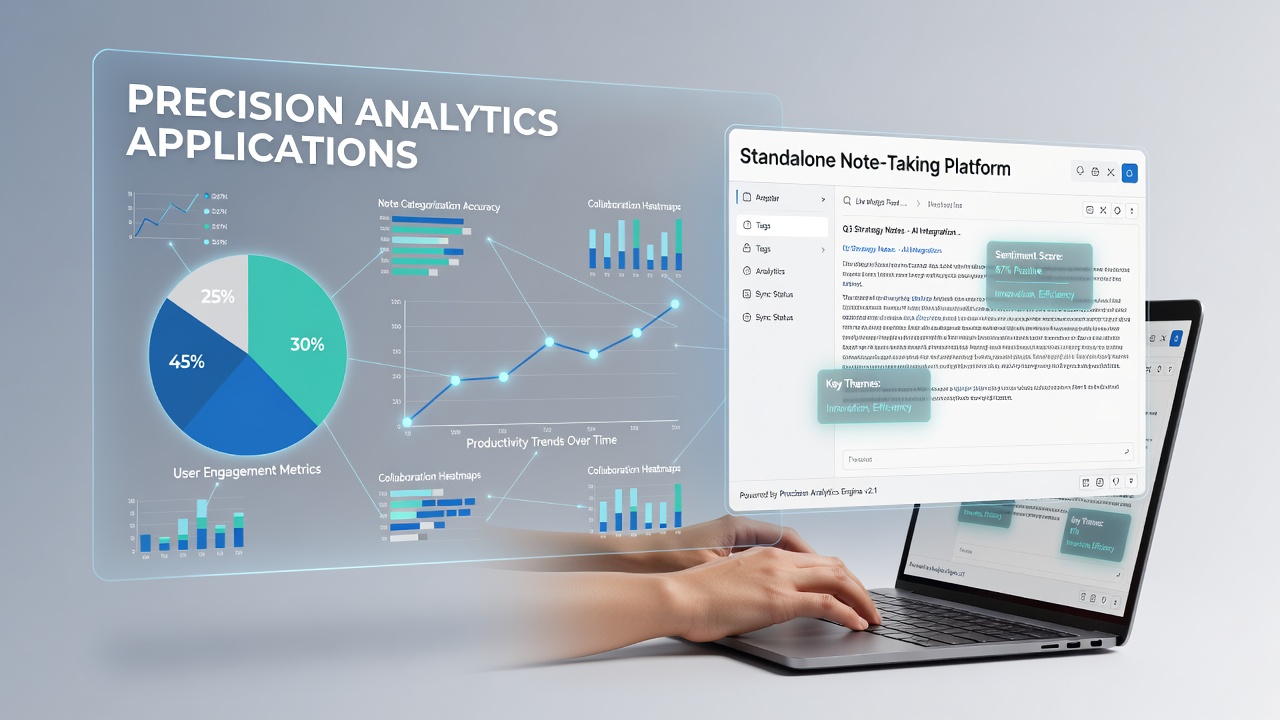 One documented case involved a small development team that identified repeated exits during the import workflow after reviewing funnel visualizations generated from precision data layers. Adjustments to the import confirmation screen reduced drop-off by measurable margins within the subsequent reporting period. Such refinements accumulate across multiple iterations, producing cumulative gains in daily active user counts without requiring large engineering teams.
Privacy and Compliance Considerations
Precision analytics implementations in these services must navigate data protection requirements that vary by region, including consent mechanisms for behavioral tracking and audit trails for data access requests. Encryption of analytics payloads during transmission and at rest forms a baseline expectation, while anonymization techniques strip direct identifiers before long-term storage. Academic studies from institutions such as the University of Toronto have examined how granular consent toggles affect both data quality and user trust levels in lightweight web applications.
Developers often configure analytics retention windows to align with operational needs rather than indefinite accumulation, discarding older session data once aggregate models stabilize. This approach supports ongoing refinement of recommendation engines that suggest relevant tags based on historical note clusters while limiting the scope of retained personal signals.Emerging Trends Observed in October 2026
Data compiled during October 2026 indicated expanded adoption of edge-based analytics processing within standalone note-taking services, shifting computation closer to the user device to reduce latency and central server load. Integration of differential privacy techniques appeared in several independent deployments, adding calibrated noise to aggregate reports without compromising individual session integrity. These developments occurred alongside broader industry shifts toward modular analytics toolkits that allow service operators to select only the measurement components required for their scale.
Conclusion
Precision analytics applications continue to shape the evolution of standalone note-taking web services by supplying detailed, actionable insights into user interaction patterns while respecting the independent nature of these platforms. Through structured event capture, compliant data handling, and iterative feature testing, developers maintain service quality across diverse user bases. Ongoing refinements in processing techniques support sustained functionality without compromising the core principles of lightweight, self-managed note management systems.